Planning Update: Mid-Rise Code & SRL East Reforms
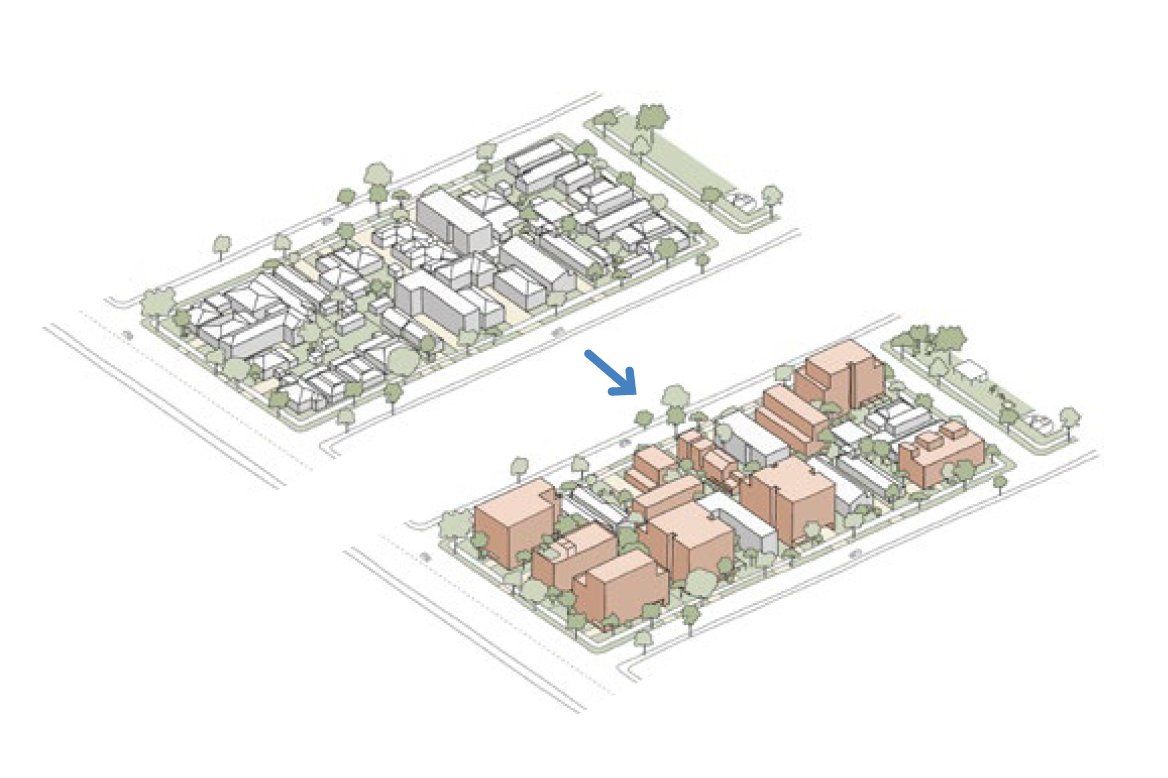
Image Source: planning.vic.gov.au
Victoria's new Mid-Rise Code commenced in April 2026, introducing a streamlined Deemed-to-Comply (DTC) pathway for compliant 4–6 storey apartment developments. The Code removes the traditional "wedding cake" upper-level setbacks, allowing more efficient building forms and improved development yields. It also introduces clear, mandatory built-form standards, including generally 4.5 m front, side and rear setbacks (subject to site conditions), improved building separation, minimum apartment sizes, enhanced daylight and private open space requirements, and 10–20% tree canopy targets.
Compliant developments benefit from a faster 60-day assessment pathway, greater planning certainty through objective standards, and are generally exempt from third-party notice, objections and VCAT appeal rights, reducing planning risk and approval timeframes for developers.
.png)
Image Source: bigbuild.vic.gov.au
The Victorian Government has approved the new planning framework for the SRL East Precincts, including Clayton, Monash, Glen Waverley, Burwood, Box Hill and Cheltenham, unlocking significant opportunities for higher-density, transit-oriented development around future SRL stations. The reforms introduce increased building heights, revised land use controls and clearer built form requirements to support housing, employment and mixed-use development.
Clayton is expected to become one of Melbourne's premier health and innovation precincts, with building heights generally increasing to up to 18 storeys around Clayton Station, transitioning to 6–8 storeys and then 3–4 storeys adjoining established residential neighbourhoods. The new planning controls also introduce clearer podium, upper-level setback and building separation requirements to improve streetscape quality, solar access and neighbourhood amenity, providing developers with greater certainty and a more predictable planning pathway for redevelopment opportunities.
31-33 Hoddle Street, Richmond
VIC 3121, Australia 03 9817 6788
info@jesseantarchitects.com.au Sydney Level 49, 8 Parramatta Square
Sydney, NSW 2000, Australia Brisbane Level 38, 71 Eagle Street, Brisbane
Brisbane, QLD 4000, Australia Gold Coast Level 13, 50 Caville Avenue, Surfers Paradise
Gold Coast, QLD 4217, Australia Adelaide 2-3 Greenhill Road, Wayville
Adelaide, SA 5034, Australia
info@jesseantarchitects.com.au