04 February 2026
Design Impacts of Parking Reform
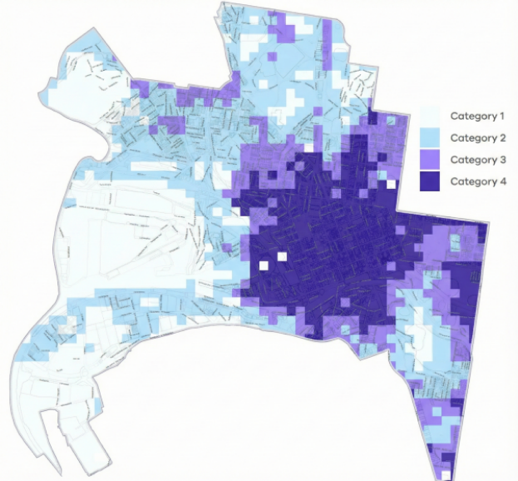
Across Victoria, recent changes to car parking controls under Amendment VC277 are reshaping how projects are conceived from day one. Parking requirements are now more closely tied to access to public transport, with lower minimums in well-served locations and new upper limits introduced to discourage over-provision. For residential projects in areas with strong public transport accessibility, this can result in a reduced number of required car spaces, directly influencing feasibility, basement scope and early design decisions.
This shift is changing the long-held assumption that every dwelling must be paired with a fixed number of parking spaces. Smaller basements, simpler structures and more efficient ground planes are now achievable, unlocking opportunities for better apartment layouts, improved amenity and stronger landscape outcomes.
We are also seeing significant benefits in our childcare projects, where reduced parking requirements have released valuable floor area — allowing increased numbers of childcare places, improved internal planning and stronger overall project viability. Understanding a site’s transport context early has become a key driver of cost, yield and design flexibility, turning parking from a blunt compliance requirement into a strategic design lever.
Previous
Next
ADDRESS
Melbourne31-33 Hoddle Street, Richmond
VIC 3121, Australia 03 9817 6788
info@jesseantarchitects.com.au Sydney Level 49, 8 Parramatta Square
Sydney, NSW 2000, Australia Brisbane Level 38, 71 Eagle Street, Brisbane
Brisbane, QLD 4000, Australia Gold Coast Level 13, 50 Caville Avenue, Surfers Paradise
Gold Coast, QLD 4217, Australia Adelaide 2-3 Greenhill Road, Wayville
Adelaide, SA 5034, Australia
CONTACT
+61 3 9817 6788 info@jesseantarchitects.com.au
SOCIAL



PROUDLY A MEMBER OF